AI Bedroom Design Ideas: Modern, Cozy & Minimalist
Explore AI bedroom design ideas for modern, cozy, minimalist, Japandi, Scandinavian, and luxury bedrooms, with prompts and planning checks.
By AI Room Design Editorial Team
AI bedroom design is most useful when it solves two problems at once: how the room should feel and how it should support sleep, storage, dressing, reading, and daily routines. A generated bedroom can suggest a beautiful palette in seconds, but a good bedroom also needs a sensible bed position, accessible storage, comfortable lighting, and enough space to move without bumping into furniture.
Use AI to compare the atmosphere before you commit to paint, textiles, furniture, or a new headboard. Start with a clear photo or a measured room, state the bed size and fixed elements, and ask for a specific design direction. If the main problem is furniture fit, use an AI room planner first. If you want to explore a visual refresh from an existing photo, try the AI bedroom design generator.
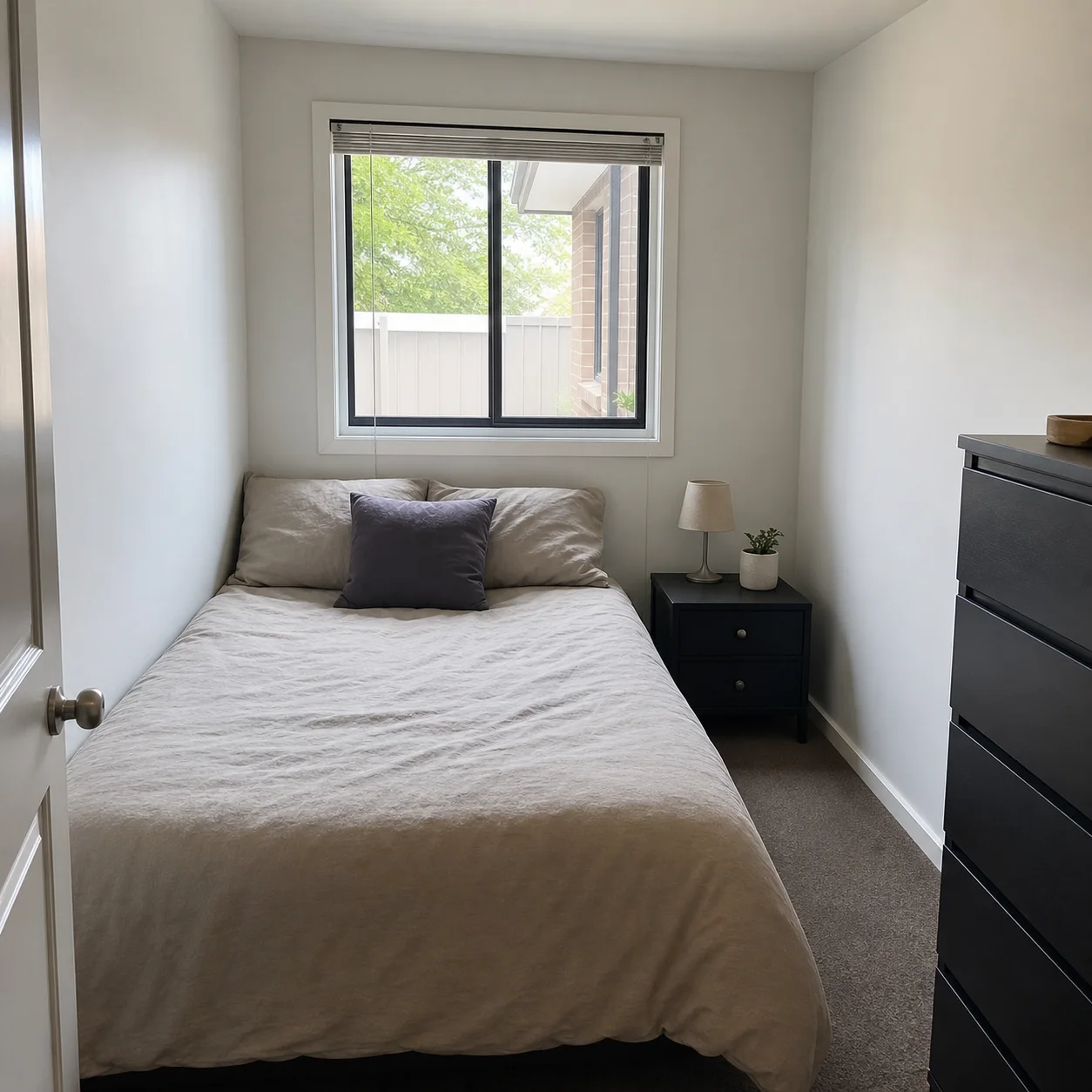
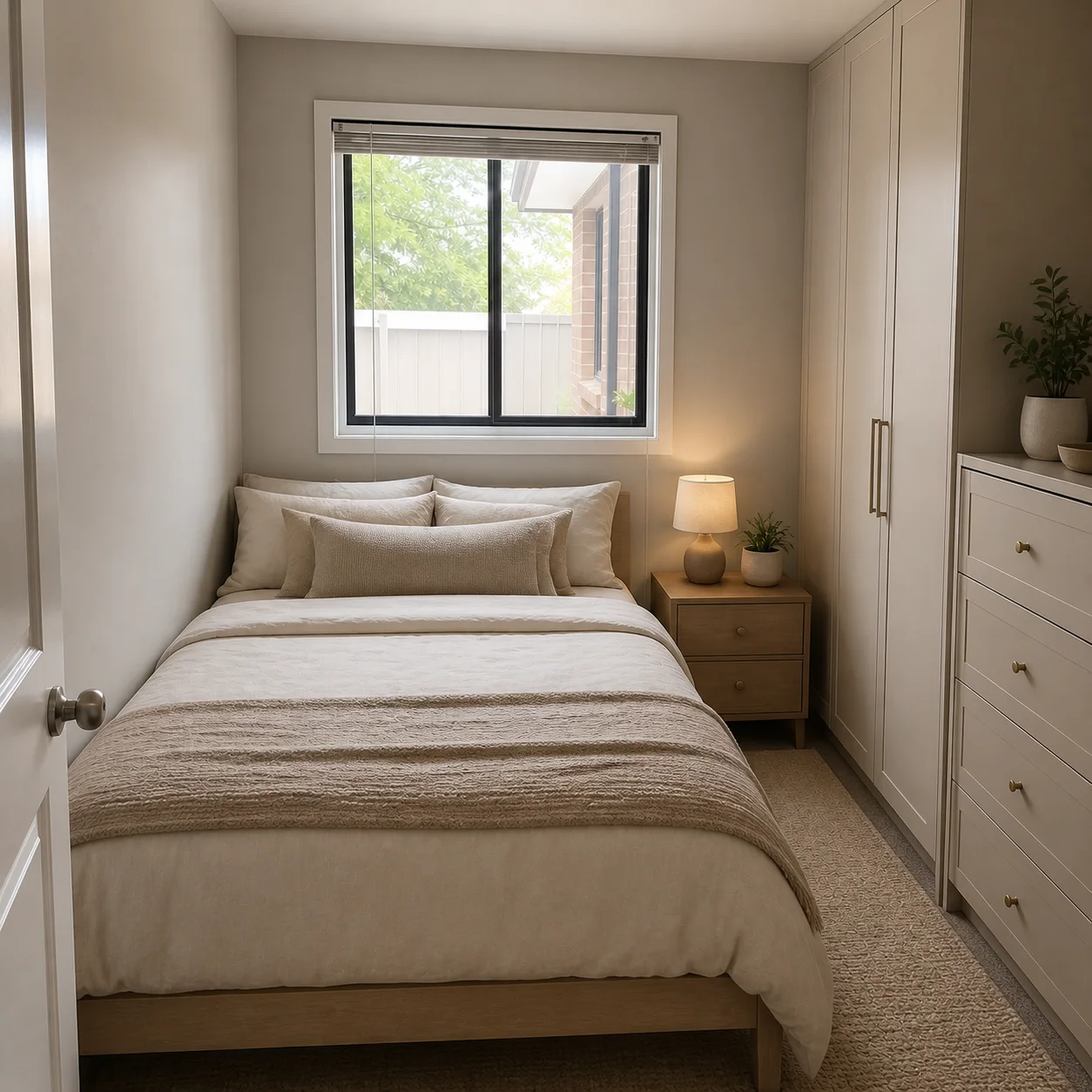
The images are concept references. Check bed dimensions, wardrobe doors, electrical locations, ventilation, and clearances before buying or building.
What Makes a Bedroom Feel Well Designed?
Bedrooms are personal rooms, so “good design” is not one visual style. A practical bedroom usually balances six conditions:
- A calm visual field. The eye should have somewhere to rest, especially around the bed.
- A usable bed position. People should be able to get in and out without fighting a door, wardrobe, or radiator.
- Accessible storage. Clothes, bedding, and everyday objects need a home that is easy to reach.
- Layered lighting. Ambient, bedside, dressing, and accent light serve different moments.
- Comfortable materials. Texture and softness should support the way the room is used.
- Enough flexibility. The layout should survive laundry, luggage, reading, work, or a change in household needs.
AI can help you compare these qualities visually, but it cannot decide them without your input. Add your routine to the prompt: early riser, late reader, shared room, child’s room, small rental, or guest room.
Popular AI Bedroom Styles
Minimalist bedroom
Minimalism works best when it reduces friction rather than simply removing objects. Use a restrained palette, simple furniture, concealed storage, and one or two meaningful accents. Ask AI to keep the room warm through material and light so it does not become sterile.
Prompt details that help: warm white walls, natural wood, low visual clutter, concealed cable management, soft woven textiles, and a clear path around the bed. Avoid saying only “empty minimalist bedroom,” which may remove the storage and lighting that make the room usable.
Japandi bedroom
Japandi combines quiet proportions, natural textures, warm wood, soft neutral colors, and a low-clutter mood. Use AI to explore the relationship between oak or ash, off-white walls, linen bedding, paper-like lighting, and a small amount of dark contrast.
Preserve the room’s actual light. A pale, low-contrast palette can look different in a north-facing room than in a bright south-facing room. Ask for soft daylight and layered evening lighting rather than a single bright overhead fixture.
Scandinavian bedroom
Scandinavian-inspired rooms often use light surfaces, practical storage, simple silhouettes, and textiles that keep the room comfortable. AI is good at showing how a bright palette can make a small room feel open, but remember that light colors do not add floor area. Keep furniture to scale.
Use a prompt that names functionality: a wardrobe that opens fully, a bedside surface for a lamp and phone, and curtains that can control glare. The result will be more useful than a generic “bright Scandinavian bedroom.”
Modern bedroom
Modern bedroom design can be soft and practical, not only glossy or dramatic. Ask for clean lines, a limited palette, integrated storage, and warm lighting. If you want a statement wall, specify the location and how it relates to the headboard, because the AI may place the accent on a wall that has a door or window.
Luxury bedroom
Luxury is often better expressed through proportion, material quality, and lighting than through adding more decoration. Try layered textiles, a carefully scaled headboard, a quiet palette, solid-looking bedside furniture, and indirect lighting. State a realistic budget range if the product accepts it, and avoid implying that the generated furniture is a real luxury product.
Cozy bedroom
Cozy design is about warmth, touch, light, and a sense of enclosure. Use rugs, curtains, textured bedding, warm lamps, and a reading corner. Keep the path to the door open and avoid letting accessories take over the only usable surface.
Bedroom Layout Before Style
The bed is usually the largest decision. Confirm the mattress size, the frame depth, the headboard thickness, and the clearance required for bedside tables. Then check wardrobes, drawers, door swings, and the path to the bathroom or hallway.
If the room is small, create a measured layout before generating images. The AI room planner can help you compare bed orientation and storage placement. Once the layout works, use photo redesign to compare headboard, wall color, lighting, and textile options.
A bedroom layout checklist:
- Can both sides of the bed be reached if the room needs two-sided access?
- Can the main door and wardrobe doors open without collision?
- Is there room for a bedside lamp, phone, water, and other daily items?
- Does the window provide useful light without creating glare or heat?
- Can curtains or blinds be operated safely?
- Is there a place for laundry, luggage, and extra bedding?
- Can the room be cleaned without moving every object?
Lighting Ideas to Test with AI
Lighting changes the perceived mood of a bedroom more than many people expect. Ask AI to show different layers while preserving the same layout:
- Ambient light: a soft overall level for getting dressed and cleaning.
- Bedside light: a focused source for reading that does not glare at a partner.
- Dressing light: even light around a mirror or wardrobe.
- Accent light: a small amount of indirect light for atmosphere.
Use “warm, soft, indirect” only as a starting point. Add the fixture type, position, and activity. For example: “two shaded bedside lamps with separate controls, a concealed warm strip below the floating shelf, and even light at the wardrobe mirror.”
AI can show a mood, but it cannot confirm lux levels, wiring, fire safety, or product specifications. Use a lighting professional when the project is complex.
Bedroom Materials and Color
Begin with the surfaces that will stay longest: floor, built-in storage, window frames, and large furniture. Then choose wall paint, textiles, and small accents. A color that looks elegant in an AI render may shift under your actual bulbs and daylight.
Useful combinations to test:
| Direction | Base | Accent | Best question to ask |
|---|---|---|---|
| Soft modern | Warm white and light oak | Charcoal or olive | Does the room feel calm without being flat? |
| Japandi | Putty, sand, and wood | Ink or muted green | Does the contrast feel intentional? |
| Scandinavian | Pale neutral and light textile | Dusty blue or terracotta | Does the room stay warm at night? |
| Cozy | Clay, cream, and layered fabric | Deep brown or rust | Does the palette support rest? |
| Quiet luxury | Stone, walnut, and linen | Brushed brass or dark bronze | Are materials doing the work instead of clutter? |
Ask for a material close-up only after you understand the room-level direction. A close-up can be attractive while hiding the fact that the colors do not work together across walls, curtains, flooring, and furniture.
Bedroom Prompt Examples
Use a room photo whenever possible. Add constraints first and style second.
Redesign this existing bedroom from the same camera viewpoint. Keep the window, door, floor, ceiling height, wardrobe, and room proportions. Keep the queen bed on the existing wall. Create a warm Japandi bedroom with light oak, warm white walls, linen bedding, soft paper-like bedside lights, concealed storage, and a clear path to the door. Use realistic furniture scale. Do not add windows, change the room shape, add people, or place furniture in front of the wardrobe.
For a small bedroom:
Design this measured small bedroom for sleep and clothing storage. Preserve the door swing and window. Use a compact bed, shallow closed wardrobe, one clear bedside surface, warm layered lighting, and a light palette with natural wood. Protect a comfortable path from the door to the bed and wardrobe. Show two layouts: bed centered and bed shifted for storage. No oversized furniture, no invented openings, no text.
For a cozy bedroom:
Refresh this real bedroom without changing the walls or floor. Keep the bed and wardrobe positions. Add a calm cozy atmosphere with textured neutral bedding, a soft rug, warm indirect lighting, linen curtains, a small reading chair, and one low-maintenance plant. Keep the cleaning path clear and do not overcrowd the room.
Common Mistakes in AI Bedroom Design
Making the bed the only idea
Many AI images spend all their attention on the headboard wall. A bedroom also needs storage, lighting, curtains, power, and movement. Mention them in the brief.
Adding too much furniture
A bench, chair, ottoman, desk, vanity, and reading nook may look luxurious but leave no space to live. State the primary activity and the maximum number of large pieces.
Hiding practical storage
Open shelving is visually appealing, but clothes and bedding often need closed storage. Ask the model to show the storage type you actually want.
Ignoring light and sleep
A beautiful bright image may be unsuitable for sleep. Ask for dimmable, layered evening light, blackout options where needed, and a calm visual field.
Copying generated proportions
Compare the bed and wardrobe with actual dimensions. The image may shrink them to make the room feel larger.
Treating “luxury” as a shopping list
Luxury can come from quiet materials, good proportion, and controlled lighting. More objects and more shine do not automatically make a bedroom feel better.
How to Judge the Result
Review the generated bedroom in three passes. First, check architecture and layout. Second, check function and routine. Third, check atmosphere and detail.
In the first pass, compare the walls, openings, floor, fixed storage, and bed position. In the second, imagine waking, dressing, charging a phone, opening the wardrobe, making the bed, and cleaning. In the third, assess color, texture, light, and the amount of visual noise.
Keep the concept only if it succeeds in the first two passes. A bedroom that looks beautiful but cannot support the daily routine is not a useful design.
Related Tools and Guides
Use AI Bedroom Design Generator for photo-led bedroom concepts, AI Room Makeover for a lower-disruption refresh, and AI Interior Design Generator for text-led inspiration. Read AI Interior Design: Complete Beginner's Guide for a broader workflow, and AI Room Planner for measurement and furniture layout checks.
FAQ
What is the best AI bedroom design tool?
Choose a bedroom-specific photo workflow when you want a visual refresh of an existing room. Choose an AI room planner first when the bed, wardrobe, or door clearances are tight. The best tool depends on whether the main question is mood or fit.
How do I make an AI bedroom look cozy?
Describe the light, texture, and routine: warm indirect lamps, layered bedding, linen curtains, a soft rug, natural wood, and a clear reading spot. Avoid adding many accessories without a functional reason.
What bedroom style works best for a small room?
There is no single correct style. A restrained palette, realistic scale, closed storage, and clear paths matter more than the label. Minimalist, Scandinavian, and Japandi directions can be useful starting points because they often emphasize visual calm.
Can AI choose the right bed size?
No. Tell it the actual bed size and verify the frame dimensions, access, and clearances yourself. The generated image can suggest a relationship but cannot measure the room accurately.
Should a bedroom have a TV or desk?
That depends on your routine. If the room includes work or media, state it as a requirement and plan the cable, lighting, and activity zones. Do not add a desk just because an AI image has an empty corner.
Can I use AI to design a child’s bedroom?
Yes for themes, colors, storage ideas, and layout exploration. Apply extra care to safety, furniture anchoring, window access, cords, materials, and age-appropriate design. Use professional guidance where safety standards apply.
How do I keep AI from moving the wardrobe?
Upload a clear photo, state that the wardrobe is fixed, identify its wall and opening direction, and ask the model not to place objects in front of it. Verify the result and move to a measured planner if it continues to drift.
A Bedroom Design Test for Morning and Night
Review every concept twice. In the morning, imagine opening curtains, choosing clothes, turning on task light, and making the bed. At night, imagine dimming the room, reading, charging devices, and moving safely to the door. These two moments reveal problems that a bright daytime render can hide.
| Scenario | Check |
|---|---|
| Wake up | Is the first path clear and is the light controllable? |
| Get dressed | Can the wardrobe and drawers open fully? |
| Read | Is the bedside light comfortable and separately controlled? |
| Share the room | Can each person reach the bed and storage? |
| Clean | Can the floor and under-bed area be reached? |
| Change season | Is there space for extra bedding, luggage, or clothing? |
If the room supports these actions, then assess the style. A bedroom does not need a new object in every corner. It needs a calm visual field, reliable storage, comfortable light, and enough empty space to make daily actions easy.
The same review applies to a bedroom that doubles as a study. Keep the desk and screen from taking over the sleep zone, provide a task light that can be switched separately, and create a visual way to put work away. Ask the AI to show the room in both modes, then verify the desk footprint and chair movement in the measured plan.
Phasing a Bedroom Refresh
AI can help you divide a project into phases. Phase one might be lighting, bedding, curtains, and a rug. Phase two might be paint, storage fronts, and a headboard. Phase three might be a new wardrobe or floor. Ask the model to show the same room with only phase-one changes so you do not accidentally design a concept that requires replacing everything at once.
Keep the fixed elements in every phase. A staged plan is more realistic when it respects the floor, window, bed size, and storage that already exist. It also lets you judge whether the smallest intervention solves enough of the problem before committing to a larger change.
Final Takeaway
Bedroom Details That Are Easy to Forget
Small details can change the comfort of a bedroom more than a dramatic accent wall. Add a place to put glasses, a phone, water, books, laundry, and extra bedding. Check where charging happens and whether cables cross the walking path. Decide how curtains operate and where a suitcase can open without taking over the room.
For a shared bedroom, test the room from both sides of the bed. For a child or teenager, consider how the room may change with age and whether storage can adapt. For a guest room, prioritize a clear surface, a comfortable light, and a place for luggage. For a rental, focus on reversible changes and do not ask AI to invent built-ins that cannot be installed.
If you are comparing furniture, ask for the same camera viewpoint and the same bedding in every version. Change the frame, headboard, or bedside storage one at a time. This makes the output useful for a real decision and keeps the visual comparison from becoming a competition between unrelated rooms.
These details belong in the prompt because they shape the design. They also create a better filter for the output. If an image removes the bedside surface or places a chair where laundry normally collects, it is not solving the actual room brief even if the palette is attractive.
It is also worth deciding what should not change. A familiar floor, a useful wardrobe, a favorite lamp, or a window view may be part of the room's identity. Tell the AI to work around those elements. Preserving something is not a limitation; it gives the redesign a relationship to the life already happening in the room.
Making the Bedroom Feel Like Yours
An AI bedroom can look generic because it is built from familiar cues: a bed, a bench, two lamps, and a neutral wall. Add one personal anchor instead of adding more objects everywhere. That anchor could be a favorite art scale, a textile color, a wood tone from another room, or a reading routine that deserves a real light.
Then edit the result. Remove any object that does not support sleep, dressing, storage, comfort, or identity. The goal is not to copy every visible detail. It is to use the visual to discover a few decisions you can carry into the real room.
When you shop, start with the pieces that affect scale: bed frame, wardrobe, curtains, and rug. Small accessories can wait. If those large pieces fit the layout and the light works with the palette, the room can evolve without needing a complete replacement at once.
AI bedroom design is a fast way to compare moods, materials, lighting, and furniture directions. Make the output more useful by stating the bed size, preserving fixed elements, describing the routine, and protecting storage and movement. Start with the layout, then refine the atmosphere. A calm bedroom is not only a style; it is a room that supports sleep and daily life with less friction.
A Small First Experiment
Start with the wall behind the bed and leave every other major piece in place. Compare a warm neutral, a muted color, and a textured but quiet direction. Then check each version under the room's real daylight and evening bulbs. This gives you a useful style decision without pretending that a new image has solved storage, wiring, or the full furniture plan.